

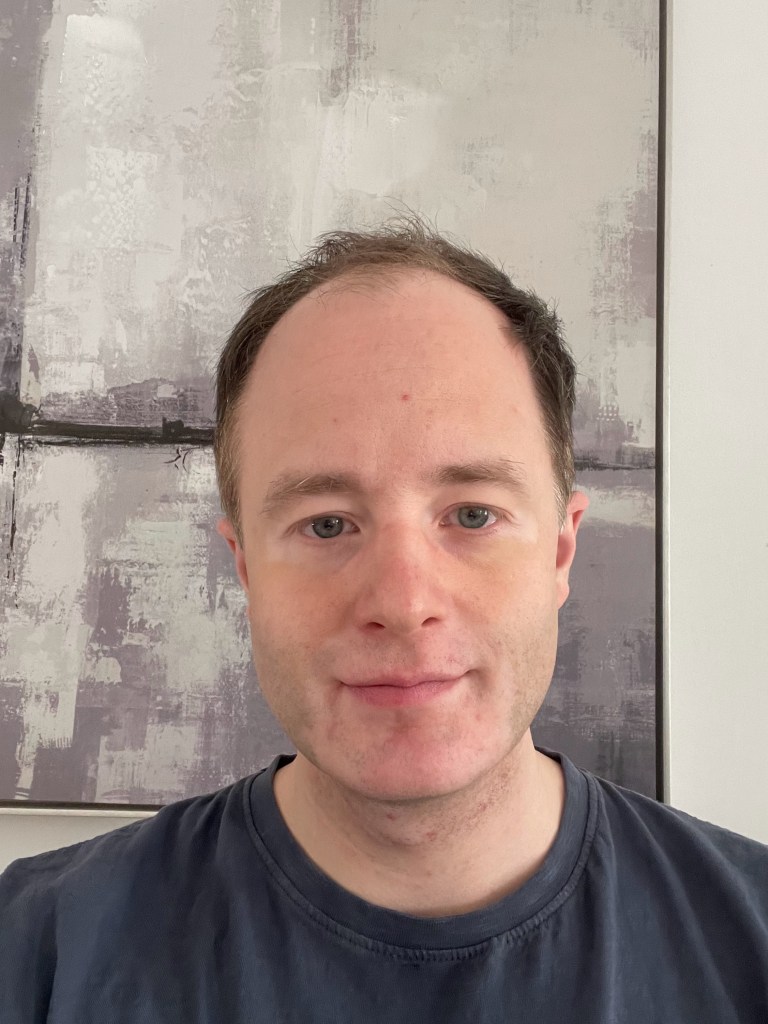
Otto is based in the great city of Liverpool and writes in his spare time. He flips between writing short stories and working on something like a novel. Most of the time he enjoys it. He loves to read. He has been published in Literally Stories, Twelve House Books’, Books n’ Pieces magazine and Bull Lit.
Jack Hathaway
I ought to tell you about Jack Hathaway; about how he looked, and how he was, because he was all those things that people say, and you would have liked him.
It’s hard to think about him now without remembering the fire. That’s the thing about it all; that some moments define your past and you can’t get away from them; histories intertwined, I guess, but I don’t know if it makes it better or worse. I just know that when I think of him, I also think of the fire.
It burned past our town; a place now so small that you could pass it without even noticing, but back then it was a thriving hub of timber and smoke, and the streets were full, and everyone spoke kindly to each other. When I think back to it, I think of summer, and I can’t remember it any other way.
Before the fire, Jack Hathaway had arrived on the island. He’d come as many do, to cut the trees and live somewhere new for a while, and quickly people grew to like him. He was funny and knew how to hold it well; and he was beautiful, and if the light caught him in the right way, you would believe in almost anything.
He worked through the forests as a rigger that summer. His job was to split the high branches so that the trees would fall cleanly onto the hillsides. He liked it and had planned to stay.
The season began under a cloud of sawdust. The men were split into groups when they arrived, and the high riggers were the smallest group, and Jack Hathaway was one of them. When I first saw him, he was sitting on the edge of an old bench beside a gang saw. His shoes were caked in sawdust and an early rain had dampened his clothes. He had brushed his hair back and was leaning lazily on his elbows. The foreman had scolded him and told him to pick up the equipment from the workshop. When he walked in and smiled at me, I think I knew then that I loved him.
I didn’t see him for a while after that. He’d taken off with the rest of the rigging team in search of new trees near the coast. He had returned and left with more machinery and supplies. I remember that he had asked me if people worked here all year, and if it ever snowed?
‘Yes,’ I said. ‘But it’s quieter and with different people. By the time the snow arrives, there’s no work to be done.’
‘Could I stay until then?’ he said.
‘You like it here?’
‘I do. We’ve set up camp near the cliffs. We’ve got everything there.’
‘You’ve got a shower?’
‘No, but there’s a river.’
I smiled.
‘It’s not that bad,’ he said.
‘I prefer hot showers,’ I said.
He looked over at me. ‘I’ll put one in for you then.’
That year ran hot, and by October the earth had burned into a fine powder and many of the men were itching for home. It was a busy time. Three months without rain had dried the trees into a brittle timber, but it made for quick cutting, and was worth it, even if some of the wood shattered easily.
Most of the cutting was done on site, deep into the hills. You could hear it when the trees fell: the familiar cheers, the birds squawking as they flew away, the sawing, the trucks rolling along the dusty roads. I can still remember it.
He came back every week for supplies: new blades, tinned food, water or sometimes new clothes if they needed them. One time he needed a new pair of shoes; he was size eleven and had the worst socks I’d ever seen.
The first time I went into the forest was after a storm. Something about how the earth smelt, I think. In a clearing, surrounded by bright ferns that sprung out of the bank, the water swirled and sprinkled under the leaves, and I saw him. I must have screamed from the shock of it because he jumped back and nearly fell into the water.
He was awfully polite about it all, and I remember liking him for it. He boiled a kettle over the fire and handed me a flask of tea.
‘I never built that shower for you,’ he said.
‘And I came all this way? Do you have time now? I think I ought to try it.’
‘Well maybe I could fashion something out of a hose. You go down to the river and I’ll sling it over a high branch.’
He smiled and looked away.
‘It’s an awfully pretty view, isn’t it?’
‘It is,’ I said.
The camp was nothing more than a circle of canvas tents around a fire; and near it, the ground had been swept dry and was warm to touch.
He had taken out some chocolate from a satchel and we’d split it between us. It seemed to muster something in him as he jumped up and darted into one of the tents. He returned with a loop of blue rope and straps.
‘I’m really not that worried about the shower,’ I said. ‘And I’m clean, see?’ I showed him my hands.
He grinned. ‘I am going to take you above the canopy. You’ll like it there.’
‘No, you’re not,’ I said.
‘It’s safe.’
‘Yes, for you, but it’s your job. I can’t haul myself up there. I mean, look at me?’
‘I am looking at you.’
I caught his eyes for a second and then looked away.
‘And anyway,’ he continued. ‘There’s a machine that does it. You wouldn’t have to do anything.’
‘And where do I stand?’
‘You’d stand with me. You’d be safe.’
‘Promise?’
‘Promise,’ he said.
He was right about the canopy. We stood and looked out over the forest. I can remember how the trees looked under the sunlight; how the birds were everywhere; how they darted past, and how you could feel their wings beating. The sea was a sheet of glass in the distance. Fishing boats were coming back, and on the horizon the faint lines of a cargo ship slumbered into the west.
I felt his arms around my waist and leaned into them. It felt safe, and we stayed. As the air turned cold, we lowered slowly and sat by the embers of the campfire. We didn’t talk, but we didn’t need to either. I miss that.
The next two weeks with him were like a dream, and even now, when walking through a forest or a small wood, I can go back to those moments and the evenings we spent by the fire. They were perfect, and it has stayed with me that way.
Jack proposed to me one night under the cool skies of late October, and by the firelight we wrote our futures. That was the last time we spoke.
The first I saw of the fire was from my bedroom as I got ready for bed. My mother had called for me to come and look, and so I did. I walked to my window and saw the clouds dusted red, and below them a sharp light that seemed to move. As the sun ebbed away, the light that had followed the treeline spread out across the hills. Soon it covered the sky, and then everything seemed to change.
The streets beat with people looking back to the forest. Fire engines burst down the roads, and against the light of the fire, smacks of more light and steam flashed through the smoke.
Halfway into the evening on those huddled streets, we heard an explosion rip through the air. High above on the hills blue smoke swirled. It was not until much later that we learned the rigging team had overturned the water tower. That single act had meant the fire burned east, where it reached the wheat fields and died.
No bodies were recovered. A plaque was raised to commemorate the dead, but then people moved on. Trees were planted, and within a decade the forests had grown back. The town prospered for a while, but after the lowlands were seeded with new pine the companies moved on and then so did the people.
I come back sometimes. I’ve seen the plaque once; it had turned pale from the sun and a vine had covered his name. I can’t find it anymore.
I’ve walked through the hills. I’ve searched the rivers and the trees. I’ve looked out across the water. I’ve poured through caves and the wooded banks. I’ve traced my way through the island until the snows cover me, and with it all my memories of him.
I have dreamt of him again, and so I find myself coming back. I wait, and when the air smells like smoke, I see him walking towards me through the dying embers.
 impspired