

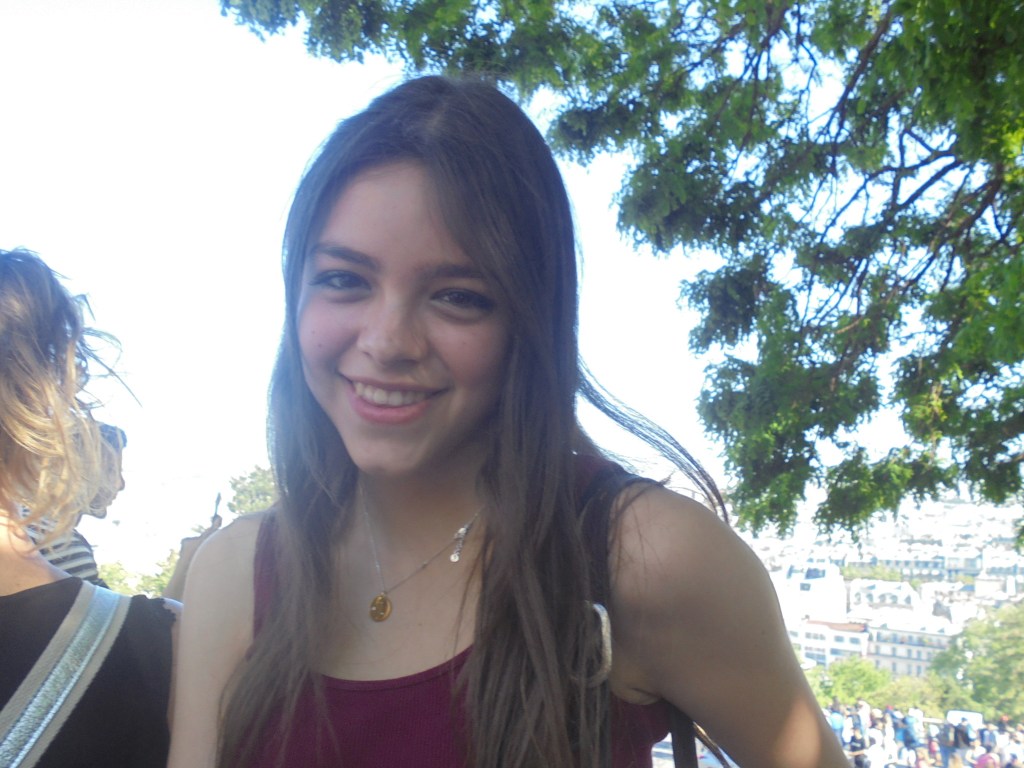
Clara Martinez predominately writes news stories and profiles as the Editor-in-Chief of her school newspaper, although her love for writing fiction is apparent to those walking past her dimly lit window between midnight and 3 a.m. One side of Clara’s family is from Bolivia, and she frequently writes about her connection to Latin American culture and the experience of moving to London. Her literary persona is Kurt Vonnegut; wry and slightly jarring until you’re about a hundred pages in. She is the second movement of Beethoven’s “Moonlight Sonata”, neither recognizable nor particularly virtuous, but pleasant nonetheless. You’re most likely to find Clara sitting at a coffee shop with a fat mug of black coffee in one hand and a book of translated prose in the other. Feel free to sit next to her, although you should be warned: it is hard to outwit the company of Kafka and Chekhov.
What I Haven’t Seen
He was reading yesterday’s copy of the Periódico de Córdoba, his loafers crossed atop the terrace railing. Mateo Caceres went through each page with a black ink pen, striking through lines and occasionally crossing out whole paragraphs. He drew over adverbs until the iniquitous “l-y” ceased to be seen. A cigarette dangled from his bottom lip.
When Caceres finished marking up the final pages, he tucked the paper under the chair and leaned forward slightly, peering between the railings. He lived on the third floor with a terrace made of iron for two people to stand, or for one to sit. The terrace overlooked a cobblestone plaza enclosed in the diamond-shaped gap between three cream-colored buildings. Leafy trees were dotted with oranges in the summer, and children would collect the fruit in wicker picnic baskets to sell on the main street. Even in winter, the handful of tourists that made it down the alley way remarked that there was a tangy sweetness in the air.
Caceres had been an editor for the district newspaper that operated out of a rented office down the street. He had quit two years previously to freelance and report on news beyond the neighborhood. For the first month, every morning, he took a different direction, walking the cobblestone streets until the street signs lost their meaning. In the second month, he wandered into bodegas, asking the regulars what they might have heard going on outside town. Once he sat next to a woman on the curb of the sidewalk as she drank from a small bottle of red wine that was labeled “Vino de Córdoba” on a handwritten sticker. Her hair frayed out from beneath a bandana and her eyes were watery and resolute. Caceres asked if she knew of anything happening outside the neighborhood. The woman drank from the bottle and looked at him with narrowed eyes. “How would I know what I haven’t seen?” she said.
In his third month of freelance unemployment, Caceres split his time between roaming the streets and selling canned beer and tabloids for a euro at the corner store.
Back home, he tapped his cigarette against the railing, watching the flecks of ash drift toward the cobblestones. When he closed his eyes, he let his cheek rest on the lapel of his blazer. He dozed as the sun went down, and when he reopened his eyes, he couldn’t tell if the fading light on the horizon was dusk or sunrise. He could hear the flowing melody of a violin wafting through the plaza, mixed with laughter. He leaned over the frame railing. A man and a woman were dancing the sevillana in the streaming yellow light of the street lamp. The man had rolled the sleeves of his shirt over his elbows and kept pausing to shake his hair back out of his eyes. He stepped very little, never moving his eyes away from the woman as she twirled around him. Only her legs were visible from beneath a broad-shouldered sport coat, and they laughed as he lost her hand inside the drowning fabric of the sleeve. The violinist was playing from a bench on the other side of the orange trees, shoulders taut as she ascended the melody and drew the bow closer to her chin.
The dancing woman spun away from the man, her red skirt fanning around her as the coat slipped off her shoulders. Caceres saw that the soles of her shoes flapped against the cobblestones as she kept swaying her hips and stepping side-to-side as the man watched. The final notes of the melody resounded through the plaza, ending with a clatter as the violinist’s bow dropped onto the stones.
The woman bent to pick up the coat, sweeping it over her shoulders. The man seemed stuck in place until she hooked her arm through his, setting off down the alley toward the main street.
The next day, Caceres sat on the terrace with his legs crossed over the railing. He was reading that day’s paper. The strokes of his pen became more erratic as the sun crossed the sky; he scribbled out commas and then redrew them, penning large arrows down the page to move sentences from here to there before changing his mind and crossing out the whole paragraph. When the street lamps switched on, he still had not made it to the sports report. He closed his eyes, but could not sleep. He couldn’t recall how long he sat before the music returned.
It was the same melody, sweet and careful, each note sounding slightly hesitant although maybe that was because of the time it took for the sound to reach the third floor. Through the bars of the railing, he saw the light shift across the cobblestones. It was a shadow.
He uncrossed his legs and walked inside, moving through his apartment door and down the stairs. Down two flights, and he was pushing open another door as flat cement became cobblestones. The woman was alone, stepping side to side within the circle of light emitted from the street lamp. He remembered the soles of her shoes the night before and how they had created a beat of their own as they struck the ground. She held out her hand, and let himself be pulled into the light.
They danced, his hand on her waist and her hand on his shoulder. It was methodical, as if practiced. She wasn’t holding his hand so much as she was pressing her palm against his to stay on balance. They swept around and around, never moving beyond the circle of light that left the rest of the plaza in darkness. He knew the song was ending as three notes arced overhead, settling on the final tone with a predictability that was beautiful and tragic. They stopped in place, his hand on her waist and her hand on his shoulder. Her eyes shone like two embers drifting away from a dying fire.
She dropped her arms and began to step backward. It wasn’t until she turned around that he realized his arm hadn’t moved from where it had rested on her waist, now hovering slightly outstretched toward her as she moved out of the light. She ran through the darkening alley, her red dress whipping around her bare ankles.
 impspired