

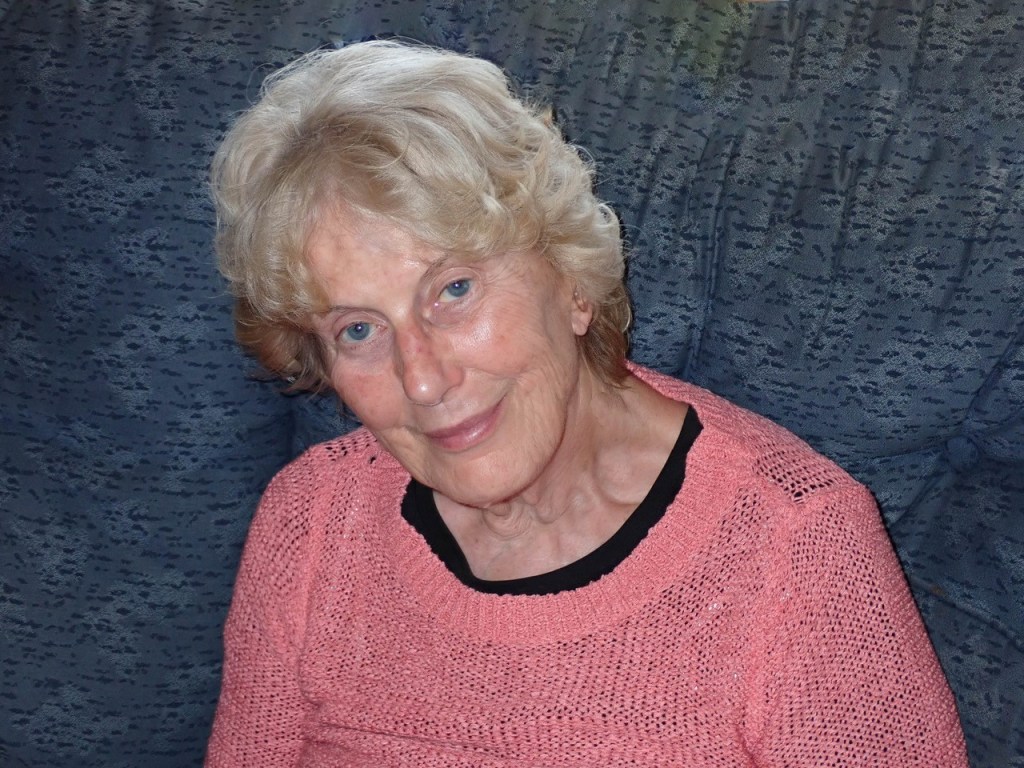
Born and educated in New Zealand, I matured, like a good cheese, for several decades in London and St Petersburg, and aged for several more years in Porto. Recently, I returned to New Zealand.
I supported my writing habit by teaching adults and children, working as an editor and researcher, and for five years on a project to build a replica frigate in St Petersburg. It’s now sailing with other tall ships in the Baltic. My most influential years for writing were in Russia — joyfully ignorant when I arrived, open-eyed and regretful when I left. The experience of mentally swivelling between Russia and the west provided me with material for a lot of my creative non-fiction. As well as that, I’m now looking with new eyes at life in New Zealand.
I have published three non-fiction children’s books (one on Edwardian children’s games with Rosalyn Cooper, sister of Robert Graves), academic articles, and some poetry. A memoir, Counting Oranges in Porto, and You are were here (a collection of Russian true-life stories) are ready for publication.
Einstein’s inner eye
On the first of August 2030, around midday, anyone using a keyboard noticed something strange. That is, anyone in the English-speaking world — I can’t speak for the rest. What was that on the keyboard? A slight yellow stain on the last letter of the qwerty row. A quick flick with a tissue or a squirt of screen cleaner, and it was gone.
An hour or two later, it was back.
The next day it covered a bit more of the key. By the end of the week, the letter P had disappeared. Of course, seeing the yellow smear, you would think it was some malfunction on your device and reach for the phone to complain.
The following bizarre conversation was played out all over the English-speaking world.
“Hi, Pete. Some hiccup on my computer.”
“You’ve got a wrong number. I’m Pete, not Eat. And what’s a hikka on a commuter? Some sort of dandruff?”
“What do you mean, you’re Eat not Eat? And I don’t know what a hikka on a commuter is. I’m talking about a hiccup on a computer?”
“You just said it again: a hikka on a commuter.”
The same mystified exchanges took place a few days later in Arabic, Russian, Chinese and Australian Aboriginal. Whenever someone spoke, the sound of P was suppressed in the gap between the speaker’s tongue and the listener’s ears.
Soon the sound of P disappeared into the void. People couldn’t hear it, so they forgot it. The trouble was, its absence left everyone floundering when they tried to talk to each other. How could they agree on a substitute when nuances of sound differed in every language, dialect and social class? It was hopeless.
It wasn’t long before P was missing in writing as well. People queuing outside the dignified building in London’s Eccleston Square looked up in astonishment at the brass plate by the door. Now it said Her Majesty’s ass ort office.
“Got it right for once.” It was a kneejerk reaction to bureaucracy. “Crowd of arse orts in there.”
The other reaction showed reverence for law and order. “They must have had a bit of a turnaround in there. Hey you! Get back in the queue!”
The queue was silent while it wondered what this meant for them. No passport: no legal residence. No residence: deportation. Only, of course, the word that rang calamitously in their mind was deortation. How bad was deortation? Could you have it done with anaesthetic?
With P almost completely obliterated now, there was a seismic change in the legitimacy of government. The contract between the governors and the people was fraying.
“We the eole of the United States, in Order to form a more erfect Union, establish Justice, insure domestic Tranquility, rovide for the common defence, romote the general Welfare, and secure the Blessings of Liberty to ourselves and our osterity…”
We the eole were let down flat by wheeling and dealing roviders and romoters who promised erfection for an idiot, open-mouthed osterity.
“Who do they think we are?” they asked.
The incumbent of the White House smirked when he was addressed as Mr Resident, and smirked again as he eyed a lengthy tenancy.
“Who does he think he is?” they asked.
In London, they listened cynically to debates in the Houses of Arliament. “Mr Seeker,” snarled the Rime Minister, “In this matter, our deely held rinciles constrain us to…”
“What are the buggers up to?” they asked.
Parliament thought they could rinse deeply held principles? It stuck in the voters’ throats, and they deserted the ballot box in droves.
Contamination spread to the royal symbol of nationhood. Our dear queen escaped this for some time, but little did people know that after the loss of P would come the loss of U. Who could revere the Keen of England? Didn’t that give the game away? In the meantime, Rince Harry, proto-Rincess Meghan, Rince William, and the rest of them fell over like ninepins in the estimation of the British ublic.
“Just another soa oera,” said the British ublic, and switched channels to Coronation Street.
The obliteration of P leapt without warning from the ground to the sky, and aeroplanes began crashing onto runways. The shocking sight appeared simultaneously on tv screens all over the world.
When P disappeared in the air, each operator in a control tower had been guiding several aircraft at the same time — directing one pilot as he approached an airport; giving a weather report to another; preventing collisions. Since planes were coming and going from every airport in the world, pilots and controllers needed a common language. That was English of course. Papa in the phonetic alphabet turned into a a, and aeroplanes fell out of the sky.
Suddenly flight was over, except for birds. Unemployed air traffic controllers were two a penny. They scratched a living as traffic cops, or lollipop ladies on school road crossings, and moonlighted as theatre ushers.
Speaking of deely held rinciles, and a lot of people did, it was absolutely clear that the foundations of social cohesion, justice, medicine, mechanics — you name it — were going down like ninepins, along with the aeroplanes. What would happen to us then? Was there even a smidgin of a chance that catastrophe could be held off in time for… For what?
For the preservation of human hegemony over the natural world? But that had its own oblivion racing towards it. It was 2030 now, and in twenty years it would be 2050, the tip-over year for global warming.
Some farsighted and silent savant, the Einstein of the twenty-first century, had a flash of understanding. He didn’t have to calculate: the solution to the second problem was laid out before his inner eye.
It was 4030, and the world was littered with broken machines. Stepping calmly through this mess, as they emerged from regenerated forest to drink from rivers of pure water, were analphabetic animals. Among them, pecking the ground peaceably, were beautiful birds of strange new kinds.
The Princess and the dolt
The architects’ office was on the twenty-eighth floor, where the curved bank of windows gave a stupendous view over the harbour. Of course, the windows didn’t open. Sound was blocked out. Weather was blocked out. People in the partnership had long ago stopped looking out.
Donny and his live-in girlfriend Sophie were sitting side by side at banks of computers, loaded with the latest CAD programmes. They were walking through 3D space, reversing floor plans, flipping them back again, devising wraparound façades and goodness knows what else, while working through dozens of calculations.
Donny was very intelligent and very gifted, and he knew it. Elena and Dave, the senior partners, knew it. What was at stake, was a countrywide nomination for an award, international contracts, a partnership for Donny.
“And for Sophie!” she yells furiously inside his head.
They had a screaming match at home last night, and another, all the way down Tinakori Road, while driving their classy convertible to work. (“The Jaguar XK. Long, low and effortlessly elegant, the Jaguar XK is one of the most desirable convertibles around.”) Both of them paid for it. Both of them insure it. They take turns to drive it.
Today Donny was behind the wheel, with Sophie belted in beside him, shouting. She was driving him mad.
“You’re an arsehole Donny, a total rat. This is our project, not yours. It was always the both of us. Two partnerships, Donny, two partnerships or I trash the computers. What’s happened to your brain, imbecile?”
She wouldn’t stop.
“Elena and Dave are in New York, not in Wellington, so they can’t see what’s going on. While their backs are turned, you’re fiddling with our work. You think you can play off what I’ve done and pass it off as your own? Think twice, dolt. What’s come over you in the last week? Someone put a spell on you?”
He already had one of his headaches. Now her voice was trolling through his brain. He jerked round to give her a swipe over the face, and was only stopped by three things. A police car was beside them. He was making a right turn into Hobson Street. He was right-handed. Strapped in by his seat belt, he couldn’t twist round and swing his fist across her face.
Sophie saw him jerk, understood what it meant, and her face went from furious to frightened.
Donny finished the right turn, stopped the car, and leaned his head on the driving wheel. He loved Sophie. He would never hurt her. What was happening inside him?
Something flashed across his mind. He’d forgotten the word for it. A sort of Jewish imp that gets into your head through a nostril, and takes over your body and mind.
Forgetting their quarrel, he turned to ask her. “Soph, what’s the name of that Jewish…”
She was looking totally miserable.
Now he’s in the office, staring at the computers, and his head is splitting. Fresh air. He needs fresh air. He goes out to the lift and presses the button for the ground floor.
The air-conditioned lift was lined with mirrors, giving infinite recession. A hundred Donnys with pale faces and headaches stared at him. A hundred images of Sophie’s miserable face hovered over his left ear.
The lift stopped and the doors began to open, with the red indicator showing 2. There was no —2. Under the ground floor was a car park, that’s all, —1. There was no —2.
Donny didn’t step outside into what passed for midsummer Wellington weather — a bit cool, a bit windy, a bit of sun, take it or leave it. Instead, he was impelled into windless darkness. The doors closed behind him, and he heard the lift starting upwards.
He turned around to press the button and go back up. No door. No lift. Empty darkness.
There was soft earth under his feet. He felt a few pebbles through the soles of his shoes. The flashlight on his phone lit up earthy sides, a lumpy earth ceiling, with roots growing down through it.
Donny turned off the flashlight while he thought. Did he charge the phone last night? He couldn’t remember. He moved to the right until he was stopped by the side and carefully began to feel his way round it. He must come to the door of the lift.
Instead he stumbled against some object that moved away from his foot, and cleared its throat.
“There you are,” it said in a neutral voice. Polite, a bit officious, not alarming. “You are in good time, but we must be on our way.”
A flashlight went on briefly, and Donny saw the object push back the sleeve of its jacket to look at its watch. Apart from the jacket, the object was unclothed — if you could say that being covered in white fur was unclothed. It had long ears that flopped over at the tip, and the pink-tipped nose twitched officiously in the flashlight.
“Come along, they are waiting for us.”
“Come along where?” It was a reasonable question to ask a talking animal when you are a person, used to being in charge.
The fur-covered object read his mind, and laughed, slightly contemptuously.
“Two-legged creatures are animals. Four-legged creatures are people. You didn’t know that?”
An image of caged humans in Planet of the Apes flashed into Donny’s mind.
“You needn’t be alarmed. We won’t put you in a cage. That sort of nonsense ended years ago. We are different, that’s all. People, and animals. Us, and you.”
“Now, out of your own free will, you have to press the wall. Press it, and a door will open.
Donny pressed the wall, and a door opened to bright sunlight and fresh air. His headache had gone. The self-styled person passed him a food pellet and a beaker of water. It was much taller than Donny, with very clean white fur. To all intents and purposes, it was an extremely big white rabbit.
Immediately Donny knew where they were. “Are you taking me to the Red Queen?”
“No, to the princess in her palace.”
It took an iPad out of its pocket, and pressed some keys.
“To make sure that everything is in order, I must ask you some questions. Is your name Donny? Good. And you are twenty-six?”
“Twenty-seven in three days’ time.”
“That is immaterial. Your zodiac sign is Capricorn? Good. Your father is the youngest son of three brothers? You are also the youngest son of three brothers? Good. Good. The oldest son is wise; the middle son is rich; the youngest son is always a dolt. That makes you are a dolt twice over. And your birthday is when?”
“The first of April.” Donny waited for the usual imbecilic remark, and when the rabbit-person just nodded its head, he said, “So I celebrate it on midsummer’s day, for obvious reasons.”
“Good, good, good, that makes you a dolt three times over. Just what we at the palace are looking for. Now we must be on our way. The princess is waiting. Climb on my back, it will be faster than walking.”
Donny thought of the Jaguar XK (long, low and effortlessly elegant) parked under the ground floor of the office block, and hopped on the rabbit-person’s back.
It was a comfortable ride, leaning forward against the soft head and long ears, not strapped in by a seat belt. They loped through pleasantly rolling countryside, where sheep with one-track-minds (people, according to the rabbit-person) grazed in fields, and stands of spreading trees gave them shade.
They passed no-one on the way, until Donny spotted a woman on the left side of the road. As they got nearer, he saw that she was quite old, sitting on the grassy verge with a red striped skirt spread out around her legs, plaiting a reed basket.
Naturally the rabbit-person stopped so that Donny could receive a gift from the old woman, for why else would she be sitting there? Her hand reached into the unfinished basket and came out holding a small tubular object. She put it in Donny’s hand and closed his fingers round it.
“You may use this to preserve memory or erase it for ever. But you may use it only once, so choose rationally: keep or lose.”
It was a red plastic and chrome memory stick. Donny put it carefully in the right-hand pocket of his jeans.
“Right side of the brain for reasoning,” he murmured to himself
The two loped on, one underneath, the other on top, but feeling equal and quite friendly by now. When the rabbit-person spoke from time to time, its voice had lost that annoying tinge of officiousness and self-importance.
Of course, it wasn’t long before they saw a second woman waiting at the side of the road, on the right this time. She was sitting down, leaning back against the trunk of a tree, with her blue striped skirt spread out around her legs, peacefully smoking a pipe.
“Hello, young man,” she said, taking her pipe out of her mouth, and digging her hand into her skirt pocket. “Something to see you through in time of need. It’s a form changer.”
She passed him a flattened white plastic disc with a red button in the centre, and winked at him.
“When you suddenly need to change your shape, imagine a clear picture of what you want to be, and press the button. You can only use this once. On your way now.”
She put the pipe back in her mouth and Donny put the disc in his left pocket.
“Left side of the brain for imagination,” he murmured to himself.
Such gifts always come in threes for a dolt who’s setting out on life’s journey, so the rabbit-person and Donny kept their eyes peeled for a third old woman, but no luck. In no time they were at the palace gates.
Then in no time they were at the door of the princess’s audience chamber, where the rabbit-person pressed Donny’s hand in a friendly way, and loped off down the middle of the corridor, looking at its watch.
Donny opened the door and looked around for a throne with a princess on it. No throne. But a young woman was standing at a table, with her head bent over a computer. She was impatiently pulling her skirt out of the way with one hand, and holding a tiara on her head with the other.
She was a real princess, all right. Not the sort Donny saw in the streets of Wellington: small fry in pink princess skirts, with gumboots on their feet and a parka on their top half. Her gown was sumptuous, glittering with jewels and embroidery, beautifully cut to show the lovely figure. Soph would look just as good in that, thought Donny loyally.
The tiara was a problem, obviously hard to keep in place on her head when she bent forward. But it sparkled with rubies and diamonds, the sort that people usually see with triple-thick glass between them and the crown jewels.
The shoes were a giveaway. Slender heels so high that the Princess of Wales would be proud to be wear them. But the princess had kicked them off, and they were lying on their sides by the computer table. She had a pair of sneakers on her feet.
“Good on her,” thought Donny. “My darling Soph wouldn’t wear high heels either.”
How he wished that his darling Sophie was here instead of this princess, so they could have a good talk, take off their clothes, and make love.
“Hi,” said Donny.
“Hi,” said the princess.
There was a pause.
“You OK?” said the princess.
“You OK?” said Donny.
There was another pause.
Things were going quite well, but they would have to stop talking at the same time and saying the same thing.
The princess gave up the struggle with the tiara and put it down on the table. She pulled up the skirt of the w wonderful princess dress, and hitched it round her waist, out of the way.
“You want to look at this programme I’m using? I’m designing a new palace. Got the latest CAD.”
“Now you’re talking!” thought Donny.
He walked over to the table, and the nearer he got to the princess, the nicer he thought she looked. Pretty mouth. Pretty brown eyes. Sophie also had a pretty mouth and brown eyes. And she had a brain behind them. Did this princess?
She picked up a printout of calculations and handed them to Donny.
He looked at them upside down, and no mistake, the person who was doing these had a brain behind her face. What was she saying?
“…state secret…need a dolt with a brain to help out…then get rid of him…down the well…no scandal…”
Donny was only half listening, because by now he’ d turned the printout the right way up and scanned the first three pages. He was incandescent with rage.
“You thieving bitch!” he shouted.
That’s no way to speak to a princess.
“Where did you get hold of this? Sophie’s work! My work! I mean, our work! You want to grab the prize and the contracts and the partnership?”
“I’ll stuff the lot of this down your stinking throat before that happens. No, better than that. Just watch!”
He grabbed the magic memory stick out of his pocket, and stuck it in the computer. The princess could piss off. No-one was going to steal darling Sophie’s precious work. To hell with his own work. Soph and he would find something better to do with their lives. Delete! Delete forever! He pressed the key.
“Ha ha!” laughed Donny maliciously.
“Ha ha!” jeered the princess.
She waved her own memory stick at him. “You think I’m a fool? It’s all here.”
Donny lunged at her to grab the stick, grabbed her skirt by mistake, and the whole dress tore in half, leaving her arms stuck out in the sleeves and the skirt flapping down below. What a scarecrow.
Jesus, Mary and all the blessed saints — what was she wearing underneath? The yellow lace bra he gave Sophie for Christmas, the adorable matching knickers on New Year’s Day. And those brown eyes? Whose brown eyes? Are they jeering? Are they laughing?
“Oh! Oh!” cries the princess.
In the blink of an eye she’s turned into a lithe white fox. Her eyes are gleaming, her fur is lustrously thick, and Donny wants to plunge his hands into it.
“Oh! Oh!” she murmurs, slipping out of reach.
She swished her long tail across his legs, and skittered under the bed.
Did I forget to say that this meeting between the princess and the dolt was in a bedroom? Well it was.
As the tip of her tail disappeared under the bed, the dolt kept his head screwed on.
The second gift, from the second old woman — the shape changer. Now’s the time. Quick as a wink, he pulls it out of his other pocket, imagines a magnificent golden-haired fox, and presses the button.
The tip of his bushy golden tail had just finished forming as he skittered under the bed after the white fox. There were a few snarls and squeals, and then quiet snufflings and rustlings, for half an hour…well to tell the truth, for an hour.
Finally, they slink out from under the bed and stretch out beside each other on the mat.
She’s still in her white fur; he’s still in his golden pelt. They lie with their heads close together. There are things they want to say, because nothing has been settled between them yet, not by a long shot. But prudence keeps their mouths shut.
Time doesn’t just stand still in the underground wonderland. The two of them slowly changed back into human shape, finding themselves dressed in clothes from the Met Opera’s production of Sleeping Beauty, a rave in autumn 2020. The computer turned itself on, and they heard the pas de deux between the prince and princess from Act 3, on YouTube.
The pas de deux was the missing third talisman.
She opens her mouth. “Your place or mine?’ she asks.
(Meaning, we can sort out all this trash between us, so where are we going to live, now we’ve got together again. Down here where I am, or up above where you came from.)
He opens his mouth. “Both,” he says.
The ridiculous fairy tale clothes melted off them. Sophie was in her little black top, the one he gave her last birthday, and her adorable blue knickers with red spots. She sneakily bought them on one of their trips to New World and flashed them in his face when they unpacked the grocery bags.
Donny was in the green Thunderpants his aunty gave him at Christmas, and a Tee-shirt with the logo of the architectural partnership spread across the front.
The logo was a make-or-break by the good fairy who arranged this finale to Act 3. Would their reconciliation last the wear and tear of real life? What about rivalry over promotion to the partnership?
“Stuff the partnership.” (Sophie)
“Stuff the partnership.” (Donny)
Suddenly Donny felt a tickling at the back of his nose, a tickling like he’d never felt before. He gave an enormous sneeze, and as he sneezed, a tiny, black, wriggling thing shot out of his right nostril.
It didn’t drop on the floor, dead. Oh no! The nasty squirming thing wheeled around and flew out the window, to torment some other unlucky person.
So that’s another happy ending in the bag — at least for Sophie and Donny.
 impspired