

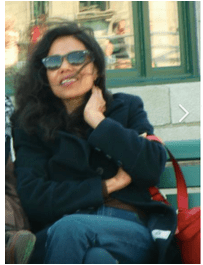
Mehreen Ahmed is an Australian novelist. Her historical fiction, The Pacifist, is a Drunken Druid’s Editor’s Choice. Gatherings, is nominated for the James Tait Black Prize for fiction. Her short and flash fiction have won in The Waterloo Short Story Festival, Cabinet-of-Heed stream-of-consciousness Challenge, shortlisted by Cogito Literary Journal Contest, shortlisted by Litteratuer RW for Litt Prize, finalist in the Fourth Adelaide Literary Award Contest. A Best of Cafelit 8,three-time nominated for The Best of the Net Awards, nominated for the Pushcart Prize Award. Also, critically acclaimed by Midwest Book Review, DD Magazine, The Wild Atlantic Book Club to name a few. She is contributing editor and jury to the KM Anthru International Prize of the Litterateur Redefining World Magazine and a featured writer for Flash Fiction North and Connotation Press. Her Toads on Lily Pads was curated by Cambridge Press on Muck Rack. She is widely published online and in anthologies. She has published eight books, and her works have been translated in German, Greek and Bangla.
Wordsmithing
Water and oil don’t mix.
Not much use trying to fix.
Determined, not to form a new word out of a suffix.

To create a poem seamlessly;
a poet is to transcend, from the mundaneness most likely;
wordsmithing may take place to one’s fancy.

In a poem contrarily;
the poet then must blend in a hyper-reality;
as Keats maintains in his concept of ‘Negative Capability.’

What’s a poet’s relationship with poetry?
must it remain separate either oily or watery?
Or should it choose its analogy?
Own stance on creativity?

A poet’s relationship with the art,
either fully submerged or in part,
is incapable of seeing an ingrown wart,
an outsider of a world of smooth skin swart.

Keats called upon to make amends to such limitations;
one’s uncertainties;
oil in water does not blend;
cast doubt on those assumptions;
think of false certainties, and rethink talent and capabilities.

Where poetic flaws may mirror;
arrogance not to harbour;
become the poet’s interlocutor;
the malady’s interpreter.

To make sure pure poetry blooms
be a resident in that one room;
weed them out, seeds of egotism aside with a broom;
to suspend as a person to a large loom.

Wholeheartedly, to belong to the poem without a pen,
to get wrapped up in the oneness of a poetic bubble den,
allow poetry to breathe fresh through them;
flourish in wreathe from intrepid mayhem for,
oil in water does not blend,
still, it can bend;
couldn’t a poet mend?
 impspired