

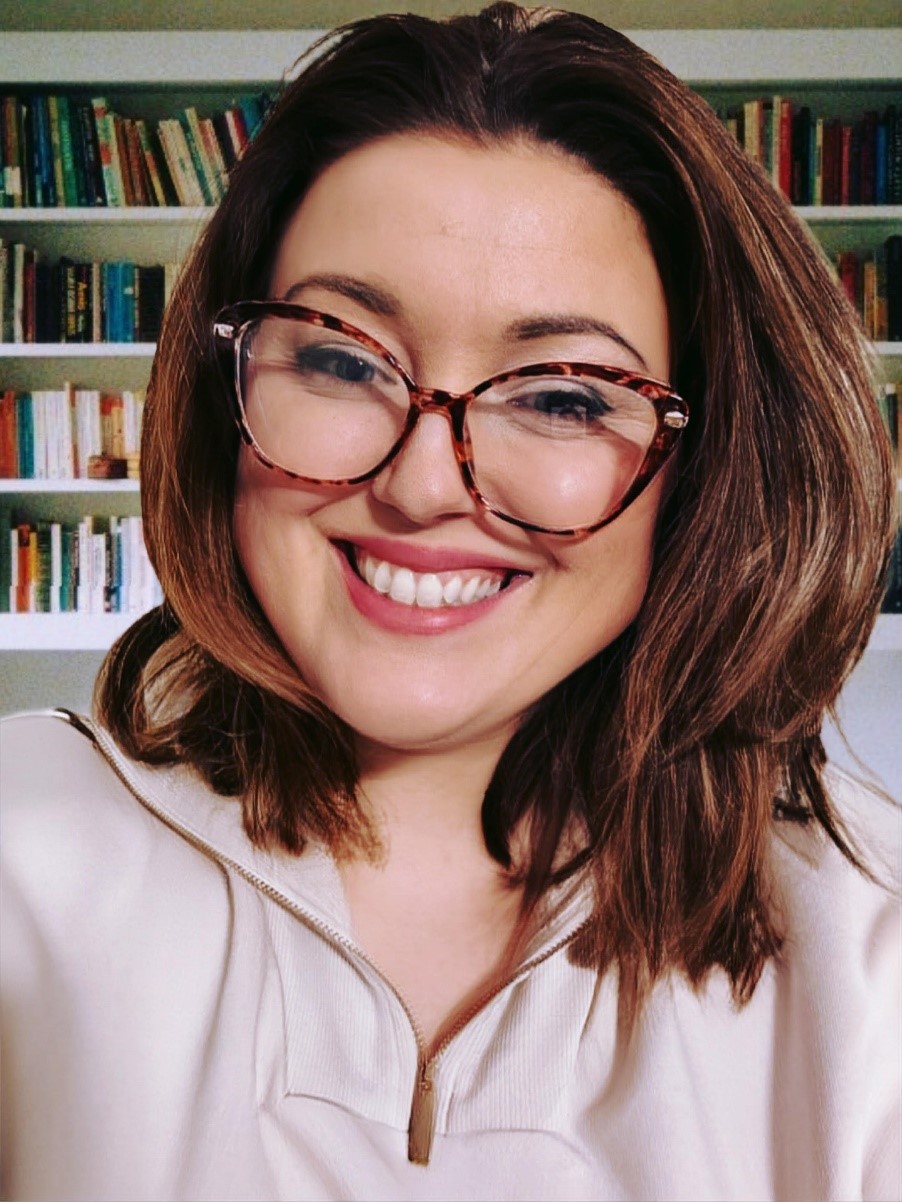
Sarah McCaughan grew up in a family of 4 in Kilrea, Co Derry, Northern Ireland. She went on to do an English degree at Queen’s University Belfast, then trained as an English teacher. After her son’s autism diagnosis and her own late diagnosis at the age of 33, Sarah sought to understand the condition more deeply. This prose piece tells her story of genetic autism, familiar in many communities, and aims to dispel rumours and inspire a kinder world.
Sarah currently works for an online educational resource site, while writing in her spare time. She previously worked as an English teacher in secondary schools for thirteen years, including experience in a private school and an Autism Unit. Life’s challenges led her to realize how her neurodivergence influenced her experiences, inspiring her to write about them. She is married to Francis and has two wonderful sons, Vincent and Andrew. They live in Coleraine on the North Coast of Ireland.
Additional Note: This piece has been accepted by the Northern Trust, Northern Ireland, and a short excerpt was published on their Facebook page for Autism Awareness week in April 2024.
Disco 2000
“There were times when I just felt like an alien on Earth.
Like I understood the language, but I didn’t understand the social cues.”
Temple Grandin, American Professor of Animal Science
The year 2000 looms, a millennium shift shimmering like sequins on our denim jeans. At ten, soon to be eleven, I navigate the choppy waters of Primary 6 – bejewelled butterflies fluttering in my hair, inspired by B*Witched. The Gaelic Football disco is the topic of conversation last thing on Friday ; the class anticipation is palpable.
“Stop that, Sarah, it’s so embarrassin’” a girl scoffs, her voice harsh.
“You, dancin’ alone in front of the stage at the disco.”
“But I thought that’s what a disco was, a place for dancing?”
“Aye, but not in the Marian Hall by yourself. Everyone thinks you’re a pure rare doll.”
Confusion coils in my chest. Isn’t a disco for moving, for losing yourself in the beat? The Marian Hall, historically echoing with hymns and tea dances, would transform into a world beyond school desks and football pitches. It was freedom in flickering lights, a chance to shed the cloak of “different.”
I bite my lip, retreat home to the safety of the Mizz magazine promising tween glamour. This is my manual for the confusion. Later, Mammy leaves us off in the carpark. “Have you your money for the tuck shop, now?”
Nerves knot my stomach, but the pulsing lights and thumping music draw me in like a moth to a flame. This space, it exists between worlds, a rebellion against the humdrum. “Can’t we just have kaleidoscopic lights and glitter balls everywhere?” I think.
A plume of smoke announces the camogie mum at the door, her eyes narrowed, counting our sweaty pounds. The ink stamp, a badge of honour, a silent message for Monday classrooms. Mammy, bless her, let me wear my gloves to Sunday Mass, ; the faded stamp was my passport to belonging.
Racing to the dancefloor I weigh up what the girls wanted me to do and what I wanted to do. There is no sign of them yet, so I start to spin and sway. My body remembers its native language, a language of uninhibited expression, and it speaks in fluid gestures against the swirling canvas of light. In that moment, I am not defined by labels or limitations, but by the boundless energy that courses through my veins. I dance, and it is freedom. The swirling disco ball lights, the neon flashes and the bass drum thumping at my heart. It is a sensory heaven. Everyone around here was always talking about freedom –in the same breath as Sinn Fein and “Tiocfaidh ár lá”, but this – this is my liberty.
“Refusing to perform neurotypicality is a revolutionary act of disability justice. It’s also a radical act of self-love.”
Dr Devon Price
We didn’t have sensory rooms in 90s primary schools, nor an understanding of autism – or trauma for that matter. This was something that I needed and it injected me with happiness and fervour again. The only way I can describe it to you now as my adult self is it was a medicine for me, for the body I felt so disconnected from and from the dull ache that I lived with. At ten years old I did not have these words, nor a diagnosis. I must have expressed it alright to Mammy, because she got me a disco lamp from Argos for Christmas.
All the boys came up to join me for the “Kung Fu Fighting” dance remix. “See? I’m not a social pariah! I have BOYS dancing with me.,” I thought smugly. The DJ abruptly stops the song and refuses to play it forever more, because the lads just started scrappin’ on the dancefloor, undoing each other’s Adidas button-up tracksuit bottoms.
The girls are here now, crowded in a huddle in the Tuck Shop. I skip over to see them, so proud of my hair glitter and await the compliments. Each strand sparkled like a silent plea for attention. Mammy’s voice echoed in my head, a mantra for social niceties : “You should always say hello to people, Sarah,” she would tell me. “And it’s only manners for them to say it back.”
“Hiya girls!” My voice came out too loud, jolting the huddle apart.
Two out of the four girls mumble a “Hi Sarah…”, but turn into their group again, huddling around their whispers and fluorescent Vitazade blue fizzy drinks.
Feeling awkward now, I decide to let them think my true motivation for coming here was for provisions. The older teen girls in charge of the shop, queens of this concrete castle, noticed my glitter.
“That’s class Sarah! Where’d you get it?”
I infodump about the Mizz magazine with the free hair glitter, and how I picked the silver one to match more of my outfits, but how there were still 3 copies of the pink one left in the local Mace if they wanted one. Then I begin to tell them all about the Vengaboys’ interview and problem pages contained within. “There was a poster of that geezer, Fatboy Slim? His tracks are so texturized, so different.” They give me a friendly laugh, but don’t say much back. My attempt at coolness, parroting English slang and musical jargon from the magazine, fell flat. It was leaving peers confused and wary of me. (There are no “geezers” where I’m from – there’s “lads” , a “crowd’a boys” and “young chaps”.) I know that now.
Deflated, I walked away clutching my bag of suspiciously old Tayto crisps (five months past the best before date, classy GAA) and a luridly orange Vitazade. (Just what you need for an evening of dancing and talking to boys.)
Alone now, the girls’ laughter echoed in the sterile air, a cruel mirror to the voice in my head that whispered “too loud,” “too weird,” “too much.”
The laughter of others echoed in my ears, a painful reminder of connection I craved. The pulsing lights might have dimmed, but the memory of that feeling, that liberation, wouldn’t. It would become my personal soundtrack, a secret rhythm pulsing beneath the surface, a constant reminder that sometimes, the best dance parties happen entirely in your head.
Maybe someday they’ll talk about that in Mizz.
 impspired