

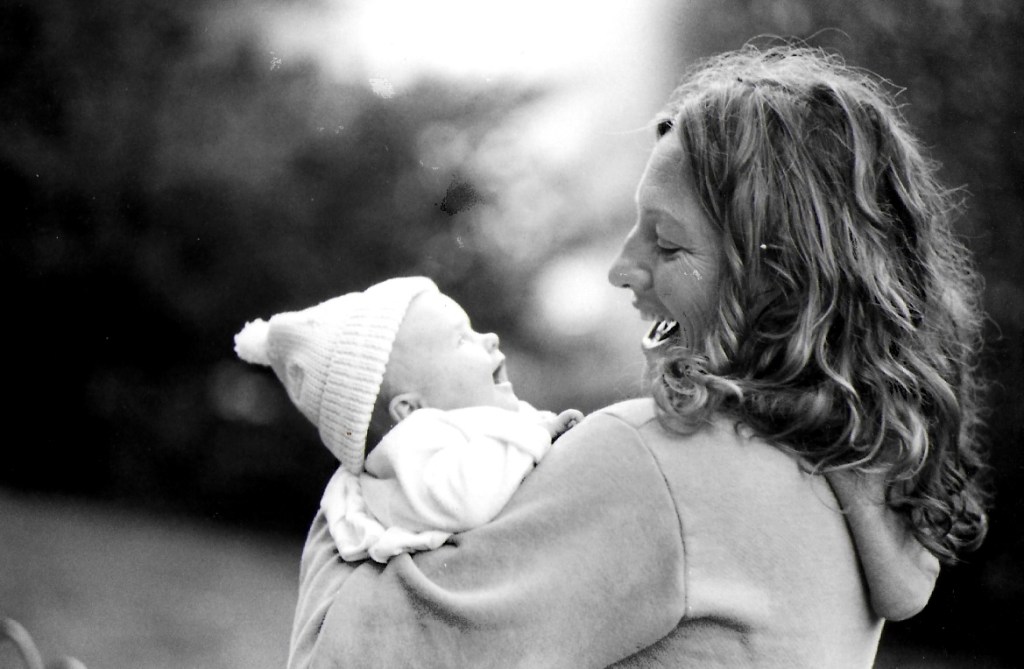
I am a Freelance Writer/ Researcher, with a lifelong passion for good books and writing. I studied English Literature and American Studies at the University of Manchester, and I have spent my time over the last 2 years travelling Latin America and working Freelanced in numerous roles, including as a Personal Assistant to a Stylist, copywriting for Medical Practitioners, London-culture article reviews, and currently as a Neighbourhood Researcher and Copywriter. I am super keen to develop my experience within the Publishing Industry, and put my communication, writing, and organisational skills to practise in a business that is ever-changing and adapting to our progressive culture. I also love writing in my free time, as a means of expression and of understanding life better.
Anticipatory Grief Dictated my Youth for 7 years – Dealing with my Mum’s Cancer and Finding Hope
It goes without saying that finishing University is one of the most confusing limbo periods of young adulthood, regardless of external factors. Many people go straight into Graduate Schemes, some have had their Masters planned out since first year, and some go down the travelling route. I fell into the last category, but I was also experiencing the last year of my mum being alive, which came with added confusions. An already uncertain period of time, made even more weird by the impending death of the most important person in my life. All the while being somewhat contradictorily excited for all of the big plans lined up.
As with any exploration of grief, it is important to disclose that every experience of death is unique, and I cannot pretend to have the knowledge to speak on behalf of the majority. Saying that, even having a few people who can find comfort and relate to the experience is important in making you feel less alone – particularly when dealing with grief from a young age amongst all the other strains of beginning adulthood.
When I think about the 7 years of my life in which my mum was terminally ill, I’m left with a series of seemingly contradictory experiences and emotions. I was 15 when she was first re-diagnosed and just about to start my GCSE’s, barely even getting to grips with going to my first boy-girl parties. My only comparative analogy of my feelings at the time was study leave – being constantly stressed about your upcoming exams, but at the same time having loads of fun because there aren’t any lessons and the thought of Summer gets you through. It’s strange to reflect on this early period of my mum’s illness because I didn’t think about it in any profound way. I just didn’t have the language or capacity for complicated situations yet. I try not to berate myself for this and for not being more proactive in my actions, specifically towards my mum. Instead, I consider the benefit of hindsight and remind myself that we can only do what we have the resources and capabilities for at the time.
Fast forward 6 years later and I’m moving home from University half way across the country. I had always known that this meant having less distractions from my mum’s cancer, partly because I was so exposed to the physicality of her illness, which required us to bring her meals and anything she needed to her bed. At the same time, I was working full time in jobs that I really enjoyed, I was re-exploring London having lived away for three years, and I was making an active effort to see my friends most days. Now I know you’re probably thinking that these were still distractions that kept me from confronting the inevitability of my mum’s death. I have definitely thought the same, and been frustrated at myself for not being at home all the time, attempting to process my feelings. But I always come to the same conclusion – what would it mean to ‘process’ someone so close to you dying, because it’s never going to be a solution (which tends to be how my practical brain operates). There are definitely ways to sit with your difficult emotions without attempting to process them – more of an acknowledgement that the feelings are there and that you are facing something really hard. Whilst this may sound obvious, I found it to be a really important realisation, because when you know your life is going to be turned upside down at any minute it can be helpful to enjoy your life in whatever capacity you are able to at that moment. And for the record, this is most likely what the person who is dying would want you to be doing.
That being said, I didn’t always have as much of a forgiving view of myself; there are always going to be certain triggers that make you feel that your behaviour is irrational, and that are harder to find hope in. At what was largely the turning point of my mum’s cancer (for worse), I made choices that felt impulsive and somewhat masochistic – ending my 5 year relationship, causing chaos in my relatively stable state, and forcing myself to be generally more ‘stoic’. Whether this was an unfortunate psychological human need to learn through suffering, acts of avoidant self-sufficiency, or whether it was a genuine need to make more time for myself, I’m still not sure. (In all honesty, the growing through suffering thing did work for me, so that’s something).
One of the elements I find hardest about grief now (which is definitely linked to me feeling that my growth was compulsory), is acknowledging that there are direct effects of your distress that are irreversible. Losing someone so close to you is already entirely irreversible, so trying to accept that the sub-parts of that might also be permanent is a difficult truth that I fluctuate on, depending on how strong I’m feeling that day. There’s a big part of me that wishes I could return to the more innocent parts of myself that I had to stop prioritising once I had a full understanding of how hard it can be; something we can all relate to.
The tumultuousness of my emotions that I have described so far are largely a product of the length of my mum’s illness, which saw me through the rapidly changing and confusing parts of being a teenager and a young adult. It is true that you do a lot of your maturing whilst living independently at University, but it’s hard to imagine that I would have gone through this as abruptly and matter-of-factly as was necessary with my situation. It was almost a 24 hour turn- around where I decided that changes had to be made if I were to feel like I had any kind of control over my life. I imagine this was largely a result of anticipatory grief, which dictated most of my life, even subconsciously from when I was 3 years old when my mum was first diagnosed. I learnt that your body has a weird (but impressive) way of responding when you are exposed to situations that are hard to experience – mine usually being detachment and compartmentalisation – a classic fight-or-flight response. Even weirder is the feeling when that anticipation becomes a reality. It’s a horrible paradox when your body is physically relieved at not being in a state of limbo anymore, but when the reason being for this is loss. Don’t get me wrong, I would rather have my mum alive and have a constant sense of anticipatory anxiety, but the shift in the way the stress manifests is undeniable.
Anticipatory grief is a really complicated feeling. I don’t want to play into any trope that one type of grief is harder than the other – someone dying suddenly is horrific, as is watching someone you love go through such awful things – there’s no point in comparing. My experience is with anticipatory grief, so that’s what I have the capacity to talk about. The guilt about feeling as though you are waiting for someone to die is immense. You are already beginning the grieving process, before it’s even happened. For me (again, weirdly organised and structured brain), this meant putting plans in place for myself and imagining what a world without my mum would look like. Whilst in some ways it helped to visualise that I would still have nice things going on in my life, it also felt like the biggest betrayal towards my mum; it felt like I was giving up on her. It took me some time to realise that most of the feelings we have towards grief are beyond our control – we do what we can, and what is physically possible to make ourselves feel a bit better. When you think about it like that, it’s a pretty amazing experience to put trust in your mind and body in such a way.
Five days before my mum died, I was on an island in Nicaragua, pretty hungover after a chicken bus fiesta (niche I know), when I got a call from my dad saying it was time for me to come home. This is not exactly what I had in mind for my ‘plan’, but that’s the way life is. For lack of a better tagline, in one phone call my whole world came crashing down, and I was on the next flight home with my three best friends. It’s hard to summarise how I felt in that week, because the emotional overload was too much for my body to process, but it was pretty much like being in a state of intense bewilderment. I do remember feeling beyond grateful for my friends who accompanied me home, where we spent 4 hours having a lavish Italian dinner during our layover, getting drunk and discussing our trip antics and how we would return when the time was right (shout out to female friends – the best medicine). What I’m trying to say, and which is also something that is rightfully becoming more present in discourse around grief, is that deep sadness and joy can co-exist even in the worst of times, which is nothing to feel ashamed about. In theory, 2024 was the worst year of my life. But it was also, in some ways, the best year of my life – I spent 7 months travelling, I was surrounded by the best group of friends and family that someone could ask for, and I had the novelty of looking for my first career. It’s a contradiction that I can’t articulate, but one that I know my mum would understand completely, because it’s how she lived her life even when it wasn’t fair to her.
The joy might not always be able to soften the grief, but there are a few ideologies that my mum instilled in me (before I was even aware that she was doing so), that I know will help. Her main mantra – “Love it all, even the shit bits”, seems particularly poignant in the dark times. I promise it’s not toxic positivity, but allowing sadness to exist between my happiness has generally led me to a more accepting and peaceful life. I remind myself, you can’t have Christmas everyday.
On the days where I feel more energetic, I return to the philosophy that there can be a lesson in everything, should you wish to learn from it. At times it will feel exhausting to feel as though you have to constantly learn and grow; but seeing my personal development is about the only thing I have been able to accept from the painful situations that I have found myself in throughout my youth. This isn’t to say that I have control over most of my emotions, but I work with them, trusting that if a situation is right for me, I will be in the magical slipstream with it. Whilst it’s not a solution or a justification for grief, it has undeniably made me more sentient, which makes me appreciate the good things in my life more deeply.
Whether this will be my state of mind for 3 months or 3 years – who knows? I am learning to be fascinated by the emotions I feel toward grief and how they manifest in my body – they’re always changing and it can feel scary, but I trust myself enough to see where it takes me, and I’ll cross the bridges as they come to me (with the help of the amazing support group around me of course).
My hope is that anyone reading this will allow themselves to see that, without the need for platitudes, there is a way to make painful situations a little more bearable. You might not have the power to decide what happens to you in your life, but you have the power to choose how you think about it.
 impspired