

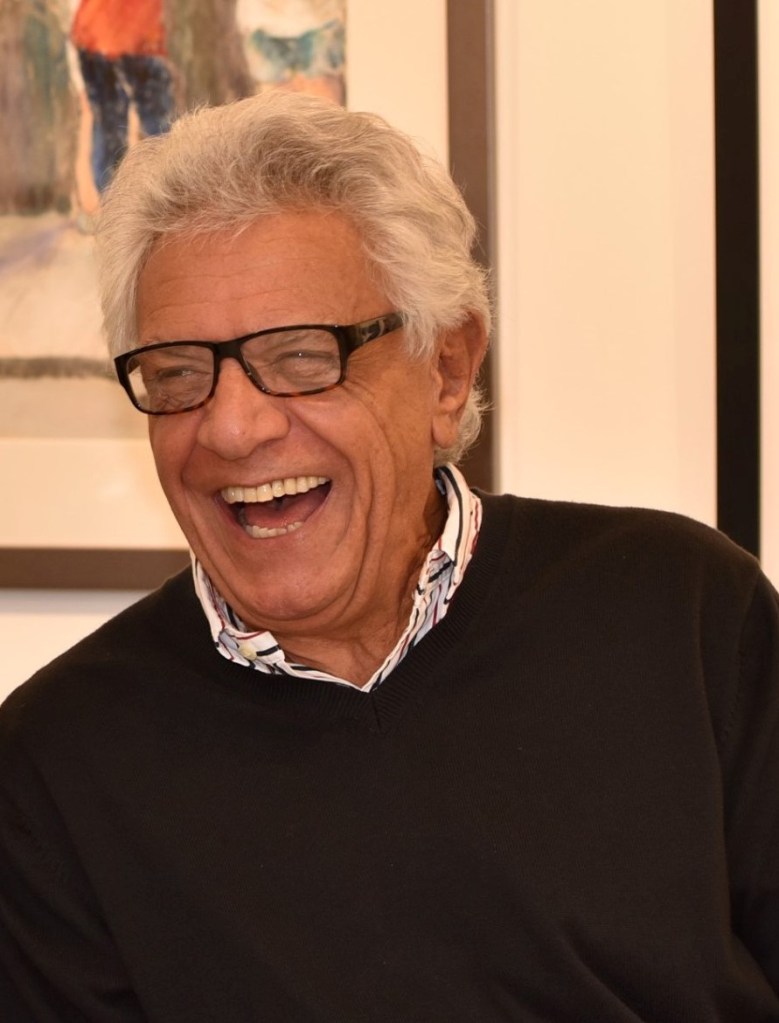
Philip received his Masters’s Degree in Psychology from Simon Fraser University, Vancouver, Canada. He has published four books of poetry, Mirror Images and Shards of Glass, Dark Images at Sea, I Never Finished Loving You, and Falls from Grace, Favor, and High Places. His fifth, Forever Was Never On My Mind, will be out Summer of 2023. Two novels, Caught Between (Which is also a 24 episodes Radio Drama Podcast https://wprnpublicradio.com/caught-between-teaser/) and Art and Mystery: The Missing Poe Manuscript. His next novel, an erotic thriller, Far From Here, will be out Fall of 2023. One play, The Apparition. His current project is collaborating with a British photographer, a French artist, and an American graphic artist to produce a coffee table book with the theme of feminine beauty. Philip also has a column in the quarterly magazine Per Niente. He enjoys all things artistic.
The Golden Book’s Scuffy the Tugboat and its influence on a little boy
Like most five-year-olds, the little boy didn’t like going to bed, but he knew it was little use to make a fuss. He put on his red flannel pajamas with the cowboy hats and lasso. He didn’t like buttoning the top button, so his white tee shirt showed underneath. The boy had to arrange the pillows just right to keep away any critters or ghosts that may lurk about during the night. The first pillow went against the headboard, next to the wall. This is where the boy would fall asleep. The next pillow went perpendicular to the first, and a third smaller pillow went next to the second so the barrier could be fortified completely.
The boy’s mother came into the bedroom with four golden books in her hand, “Which One,” she asked. The boy looked at the title’s Bambi. He liked Bambi and his friends Thumper and Flower but hated the part where the hunter killed Bambi’s mother for no reason except that she was a deer. The boy was glad his father never went hunting.
Hopalong Cassidy was one of his favorites. This book was about how Hoppy helped bring a close friendship between a boy whose mom was a teacher and an orphaned Indian
boy. Many townsfolk were mean to the Indian boy, but things worked out when Hoppy rode the bad guys out of town who wanted to harm all the Indians. Everyone listened to Hoppy when he said America was for all and we should share. Everybody became friends, smiled, cooked steaks, and ate apple pie. The boy did wonder how come in all the cowboy books, most books they never had macaroni like his family had most nights.
Pinocchio was the next book. The boy liked the movie better but didn’t understand how boys could become donkeys after playing at an amusement park. He watched his uncles drink smelly stuff in brown bottles every Sunday at his grandmother’s, and after a while, they all laughed.
The final book was his favorite. His mother had read it to him many times, Scuffy the Tugboat. Scuffy wanted out of the bathtub. One day, a little boy and his father take the Tugboat to a nearby brook. Scuffy gets away from them and starts his adventures. Past women washing on the bank, past cows that almost drink him up, past rabbits onshore till finally, it is night, and Scuffy is frightened when he hears an owl’s hoot. The Tugboat continues the following day, sailing past villages. That afternoon, the river on which Scuffy was traveling joined another smaller one jammed with logs. He had some close calls, especially when two logs bumped together with Scuffy between them.
Scuffy traveled down fine streams and wide rivers, past big and small towns. Under minor bridges, while above cars, trucks, and streetcars could cross simultaneously. He traveled so fast down a river he felt more like a train than a boat. Scuffy loved the sights–sawmills with water wheels, high water tanks, tall buildings with many windows, factories with smokestacks, shops with colorful signs, and houses of all sizes. His adventure kept him intrigued about what might still await him.
The Tugboat continued his journey, enjoying his freedom. The scenery changed to pastoral fields and greenery. The water became colder and swifter from the melting snow atop the hills skirting the countryside. He pitched and tossed on the growing larger and heavier waves. Scuffy was frightened, but he had no choice but to persevere.
The young boy’s mother looked at her only child, who had his first finger on the image of Scuffy. She asked, “Why do you like this book so much?”
The boy’s eyes became prominent, and a smile grew on his face. “Because Scuffy is brave, like daddy.”
The mother thought about her son’s comments as she recalled those horrible, lonely days when the world went mad during World War Two, her husband in Navy blue. Away for many years to fight a gruesome conflict.
The boy looked to his mother, asking her to finish the last part about how all the people joined to fortify the banks with sandbags so that the water would not flood the town.
The boy was asleep as she finished. Scuffy had flowed through the city and somehow found the original stream where he started his journey. Luckily for him, the boy and his dad were by the shoreline to catch Scuffy and bring him home. Now, all of his travels would be in the bathtub.
The boy was now a man in his seventies. He sat on a patio chair, looking at a small lake on a warm, sunny day. His eyes still twinkled, though his health showed signs of aging. He enjoyed watching the ducks, geese, and birds forage about the shoreline. He smiled to himself. He had lived in beautiful and dying cities. He had walked down clean streets, mean streets, main streets, back alleys, and academic quadrangles. He felt comfortable in dive bars, nightclubs, and concert halls. He wore a uniform during a war like his dad. He had seen many natural and human-made wonders. He had experienced hurricanes, earthquakes, torrential rains, snowstorms, and women’s rage. He had felt both love and heartbreak. Proudly, he had toasted to the best of his friends and laughed with them.
He sat with a children’s book on his lap. He had found it in a thrift shop the day before. Since he bought it, a full flow of colorful memories swirled about him. The man had continued Scuffy’s adventures. He had traveled far, treasured much, won and lost battles, and experienced what was invaluable. He had lived a “good,” no, that word didn’t sound appropriate. Brave? Doubtful, maybe just inquisitive. Simply said, he had led his life –as both participant and observer.
He reread the book, and he felt pretty sad when he finished. He thought of his parents and how he had left home to go away to college at seventeen and then continued his journey to many exciting places. What of their pain, their worry, and distress? From another point of view, he realized that Scuffy was careless, selfish, and inconsiderate.
The old man went into his home. He realized the definitions of independence and indulgence had merged for him. He laid down on his bed, closed his eyes, and momentarily, he was with his parents at a once-familiar amusement park in Southern Ontario. They were on the carousel: mom, wearing royal blue pedal pushers, white blouse with her collar turned up, oversized sunglasses, sitting in the Christmas sleigh that goes around and around, never going anywhere, while father in baggy brown pants, pullover dark brown short-sleeve shirt, cigarette smoke trailing his mouth, is standing next to a stationary horse looking blankly at the same scenery over and over. And the boy, with elastic waistband dungarees and a bright yellow tee-shirt with white stripes, rides on a wild-eyed, shiny orange tiger with black stripes that turn into flames. The cat’s muscular legs fully extended, thrashing wildly into the unknown.
A melancholy smile filled his face. He put his glasses on the nightstand and thought how quickly seventy years had passed and that friends and relatives he loved were now gone. It occurs to him how his parents had sacrificed their dreams for a reality elusive of wonderment and indulgence. Sometimes, you need only to say something once, like, “I am happy to have lived my life,” because once stated, it is no longer required.
The Small Blue Button with the Anchor Impressed on it
He sat comfortably in the child’s faded red leather chair beside the large wooden desk. He was chocolate brown and furry with a large head, shiny black disk eyes, and husky, round limbs. He was good sized, not one of those small delicate bears, but a large rough and tumble teddy bear, the kind that becomes a best friend to an only child playing in the house. His mouth was friendly, and he had a short red tongue hanging out. I dressed him in true sidekick fashion– a tan cowboy vest with fringe, rugged dungarees, and an official Deputy Texas Ranger badge. Sometimes, he would wear my green Kit Carson bandanna around his neck, but he preferred the red railroad handkerchief my father used to have in his pocket when he worked on the car.
Teddy’s snout ended in a small blue button with an anchor impressed on it. The button wasn’t his natural nose. My Mother selected that button from my Uncle Joey’s uniform. He was a sailor and died in the Korean War. My Mother said I’d be reminded of my uncle’s bravery whenever I played with the bear.
Teddy’s real nose disappeared one Saturday afternoon when we were scouting Indians. We were upstairs in my play area, which was the size of a good campsite; it was comfortably nestled between my parents’ bedroom and the bathroom.
Teddy and I were out on the trail somewhere between El Paso and Tombstone. Our mission was to bring Crazy Horse back to Fort Apache. Some good men had tried and failed- Range Rider, Buffalo Bill, Cisco, and Poncho, even Sky King couldn’t capture him. I knew the enormity of the task, but Teddy and I were committed to bringing Justice to the frontier.
We broke camp at dawn and followed the trail. On the way through Laredo, we met with Hopalong Cassidy, who told us Daniel Boone had passed through town a few days before. Hoppy said that Daniel had mentioned that Teddy and I were on the trail tracking renegade Indians.
We gathered supplies of gumdrops and a Baby Ruth from the General Store and faced the wilderness. We crossed the mighty Mississippi and waved to Huck Finn – we were heading for Durango when the Ringo Gang bushwhacked us. We shot it out at the OK Corral, killing a hundred bad guys, including Billy the Kid. It was a hard fight, but Teddy and I saved the territory from outlaw control. Everyone was so grateful when we arrived in town that they invited us into the Silver Slipper for apple pie and chocolate cake. The dance hall girls wanted us to stay. I was asked to be the Sheriff, but I told everyone I was on a special mission directly from President Eisenhower.
We were on Pike’s Peak when Teddy spotted Crazy Horse in the distance. All the Indians were wearing war paint and dancing. Geronimo and Sitting Bull were having a pow-wow with the Indian on the label of the Iroquois beer my father and uncles drank. I could see further that Custer and his men were fighting for their lives.
As we descended the mountain, we stopped to rendezvous with Sergeant Preston. We drank hot coffee in tin cups and talked about the gold rush. Teddy took Yukon King for a walk. Preston told me he was fixin’ to meet up with Davy Crockett and Jim Bowie at the Alamo. I shook his hand and told him we’d catch up with them on the Oregon Trail around chow time.
We had to capture the Indians quickly if we were going to make it to Texas before my father came home, and we had to break for supper. Teddy and I crept along the linoleum. We circled the desk, passed the bookcase, elbowed through the brush, passed the bathroom door, and crossed under Niagara Falls.
Teddy went ahead and informed me, just like Tonto would have that we needed to shimmy across a log to get to the other side of the stair steps. This was very dangerous – if we slipped quicksand or, King Kong awaited us. We took deep breaths and moved past the old cabinet model television that didn’t have an aerial connected to it, so it never really worked, and my father said not to play with it.
Cheyenne and Bat Masterson caught up to us – they had been riding hard and were traveling toward the Rio Grande. It seems that Mexican banditos coming over the border were rustling cattle. We fed our horses, busted out our blankets, and sat around the fire telling stories about Grant and Lee. We made a pact to meet on the Barbary Coast to make our fortunes in California when the time was right.
Teddy and I woke up early the following day, said our goodbyes, and headed west. The desert winds had picked up, and sagebrush was tumbling around us. We raised our bandannas across our faces, Jesse James style. The sand was blowing hard, so I opened a desk drawer and put on my father’s aviator sunglasses to keep from going snowblind.
The Indians were dug deep into my parents’ bedroom, and there were millions of them. Teddy and I had to do what no other heroes had done – I had to save America, Italy, and our house. I fixed my cowboy hat firmly on my head and adjusted my father’s glasses since they were wider than my face. I got a telegram from Matt Dillon wishing me good luck, and Miss Kitty saved a drink for us.
At just the right moment, Teddy and I jumped up, six guns in hand and a rubber pirate knife between my teeth. When my stocking feet hit the blue throw rug, we flew into my parents’ bedroom, my father’s glasses falling off and bobbling in my hand. I hit my head on the bed’s backboard. Teddy had flown across the room and crashed into the nightstand, upsetting the Italian angel lamp my grandmother brought back from Sicily.
Recovering my senses, I found my gun between the pillows. I checked the chambers and scanned the room. The curtains fluttered a bit, but luckily, no Indians heard us fall from the Rocky Mountains into the Grand Canyon. I examined the glasses – my heart was beating fast – I could never explain to my father why I needed his glasses to catch Indians in his bedroom, so I put them back in the case and returned them to the desk drawer.
Where was Teddy? I called out for him. He didn’t answer. I found my hat and slapped it against my leg to knock off any dust. Teddy was lying face down between my Mother’s fluffy slippers and my father’s detective books. I turned him over gently. His eyes stared straight ahead. He was in bad shape – his nose was missing. I eased my Mother’s slippers under his head. I grabbed a flask of whiskey from my boot and brought it up to his red tongue. He gulped down quite a bit. I wiped his lips where he was drooling. I knew I was doing the right thing because Gary Cooper and John Wayne do the same for their sidekicks.
The angel lamp had teetered on impact, turned, and knocked against the wall. The shade was lop-sided, and one of the angel’s wings had a little chip. I fixed everything up and placed the sliver of wing into the nightstand drawer next to the big Bible with the picture of Jesus on the cover.
I picked Teddy up carefully and placed him over my shoulder just like Jingles did when Wild Bill Hickok was winged in the arm. I carried Teddy down the stairs, stopping in the kitchen for some fig cookies with sprinkles on top. Teddy wasn’t hungry – he was still passed out from the experience.
My Mother was in the basement checking her new automatic washing machine. She didn’t trust it. She was frightened a hose would burst and flood the cellar. I carefully explained the circumstances about Teddy losing his nose and asked if she could fix it before the Indians headed back to the reservation. I handed Teddy to her. She smiled, kissed my cheek, and told me to get her sewing basket.
We sat on the basement steps, and I watched her select the perfect button. A small blue one with an anchor impressed on it. Delicately, she sewed and hummed as the washing machine made strange noises.
Teddy’s recovery was remarkable. Within minutes, he was healthy, sober, and ready for another adventure. We stocked up on more fig cookies and headed up the stairs to my play area, aware that there was danger at every step– the Indians had captured the bathroom. Luckily, I knew my rifle was lying on the cedar chest. Teddy and I nodded to each other and rushed to the toilet with guns blazing – every redskin was dead, so I put Teddy in his chair to rest. I took the cookies from my pocket, sat at the desk, and basked in the glow of victory. It felt good to be on the right side of the law. I asked Teddy if he thought I should write a letter to Belle Star telling her I might be out her way into Big Sky country. That’s when it hit him. I looked at Teddy wide-eyed. Ut–oh! We got to get a move on- Cochise was still out on the plains.


a beautiful homage to the toys and TV shows reflecting an era that were influential in a child’s imagination at play. The fig cookies with the sprinkles on top, most likely Cuccidati, an homage to Butera’s Italian heritage.
thank you for these same memories brought back to the fore of my own senior brain.
LikeLike