

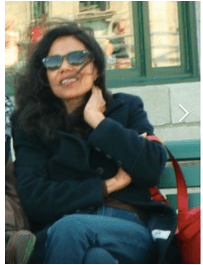
Mehreen Ahmed is an Australian novelist. Her historical fiction, The Pacifist, is a Drunken Druid’s Editor’s Choice. Gatherings, is nominated for the James Tait Black Prize for fiction. Her short and flash fiction have won in The Waterloo Short Story Festival, Cabinet-of-Heed stream-of-consciousness Challenge, shortlisted by Cogito Literary Journal Contest, shortlisted by Litteratuer RW for Litt Prize, finalist in the Fourth Adelaide Literary Award Contest. A Best of Cafelit 8,three-time nominated for The Best of the Net Awards, nominated for the Pushcart Prize Award. Also, critically acclaimed by Midwest Book Review, DD Magazine, The Wild Atlantic Book Club to name a few. She is contributing editor and jury to the KM Anthru International Prize of the Litterateur Redefining World Magazine and a featured writer for Flash Fiction North and Connotation Press. Her Toads on Lily Pads was curated by Cambridge Press on Muck Rack. She is widely published online and in anthologies. She has published eight books, and her works have been translated in German, Greek and Bangla.
Dear Father
Forget-me-not, dear Father. Please do not look at me blankly or ask who I am. For I know, I shall mope for days on end, when you do that to one of your own. Your own loving daughter, you raised with so much love and affection. This affliction hits you, now. It tears me from within. It tears me apart, dear Father. I have a lump in my throat.
I think of you and Mother. How beautiful she looks? Her skin, fair, soft in the moonlight glow, a midnight of cascading hair. You sitting by her side, holding each other in the clear, dazzling light, propped up by stars of a night; listening to Andrea Bocelli, singing, reciting Tagore and Nazrul Islam’s poetry. Tonight, you’re a different person, sensitive, caring and romantic, playing chess, laughing at silly, odd jokes, being vibrant, and perceptive that you are.
Bocelli’s voice, smooth like an aluminium sheet over a placid sea. The blind seer, who saw how he could conquer; his vision peerless in his understanding of the world. But Father, your mind, to the contrary, was not, hence your visions blurry. Dear Father, did you not see it coming?
Alas! You just called Mother, your Mother. Mother knows not that one day, you’ll not remember the distant past, and forget the formidable immediate. Mother knows not until this day, that you would be looking at the world through your netted mind. You, who made so many sacrifices, once. Your charities saved lives. Your readings, misgivings, your writings, musings, your first class brain, you led a full life.
Who now holds Shakespeare’s complete works in his hands and pretends to read it. You, who knows enough to hold the book, although the words may fall through the holes of your once whole brain. Words melt away, Words writ in water. But you did that much, at least. Hold the book closely enough like salinity to an ocean, faithful to your art; hold your pen upright when you wrote your diary. I often watched you, a little girl in awe, how you performed the cut and paste functions manually with sentences cut out of pages with scissors, in those days, without computers. How you edited, You knew your words so well, in your meaningful hay day.
You took me to see a circus once, you caged me within your arms, dear Father, so no one would brush past me, or hurt me inadvertently in the crowd-filled circus-park. I have not forgotten anything Father. But you have. Your memory has lapsed. You go out for random walks, beyond the rail tracks, and forget your home, the little blue house. These long walks back, not wilfully wayward, but to ensure safety I had to lock you up in the house, so you would not lose your way back to us.
Your brilliant mind, the much lauded works, the published newspaper pieces, bear testimony to that. Now you forget people’s names, friend’s names, your children’s names. Oh! Forget- me-not, dearest Father. I cannot endure this. If it’s in your genes, then you cannot help it. How helpless people are when they cannot remember, forget the next word; overwhelmingly helpless it must be, when you can’t even recognise your own beloved wife, let alone the names of great writers of all times, Iris Murdoch. Today you have shared the same fate. Iris Murdoch, who knew so much, then knew not what words to put in a sentence string.
What sort of morbidity is this within your mind? How do you interpret when you see faces? This blinding world of nothingness, yet nearly, not half as blind as the world of Andrea Bocelli’s notes, rhythm, tunes and modulation. Every chord, he feels. Every spice on his palate explodes in celebration of this world, which has thus far distanced itself from you, and rendered it off limits, that you descend into this chaotic, and discordant beats of no taste, certainly no music. In severe cold, you forget to put your black coat on. And you forget to select shoes from your wardrobe of a hundred pair collection.
You decline sharply into a merciless dull spot of muteness. Living in this speechless world of the mind is perhaps much braver than we’re willing to give it credit. Out of bare ignorance, it must feel like a blackhole which no light can ever penetrate. This life of forgetfulness, forgetting, and to forget at a frightening pace. All things, present, near past and then distant past how information is lost in this fretful deep well, things, names, places, and babbles.
Forget-me-not, dear Father. For I’m your loving daughter, who may one day follow your footsteps, like many demented others. How rapidly this disease grows to invade the most private thoughts and not so private. The most cherished ideals blighted in the brain, just as vices of every deplorable sin, leaving no room for confessions, amendments, let alone forgiveness. To become a blank slate, a vacuum without any traces of vices, or virtues, records of ever praying at evensong. A flat line Father, is all you display, a mere shadow of yourself without smiles, breathing expressionless and wordless, statued on a sofa or lying stiff on bed. Mother by your side; we around, but a faceless number to you. Your books, your writing desk stares at you; even the inanimate speaks volumes.
Why though, Father dear, my sorrows are vapid, unbound. I miss you. I get claustrophobic, thinking of you. I know not, how you feel in your mind, claustrophobia of a kind, perhaps? Indescribable, that you will never be able to express. No more, no less, it is you though, who ultimately carries the burden of wealth in that paradoxical net of your brain, knitting this wealth of knowledge of all the lights, the world cannot see. Nor reach new heights. Knowledge of this ugly barred condition which eludes wisdom and sanity, the world awaits to garner more brain, and as much brawn.
 impspired
This really spoke to me.
LikeLiked by 1 person